
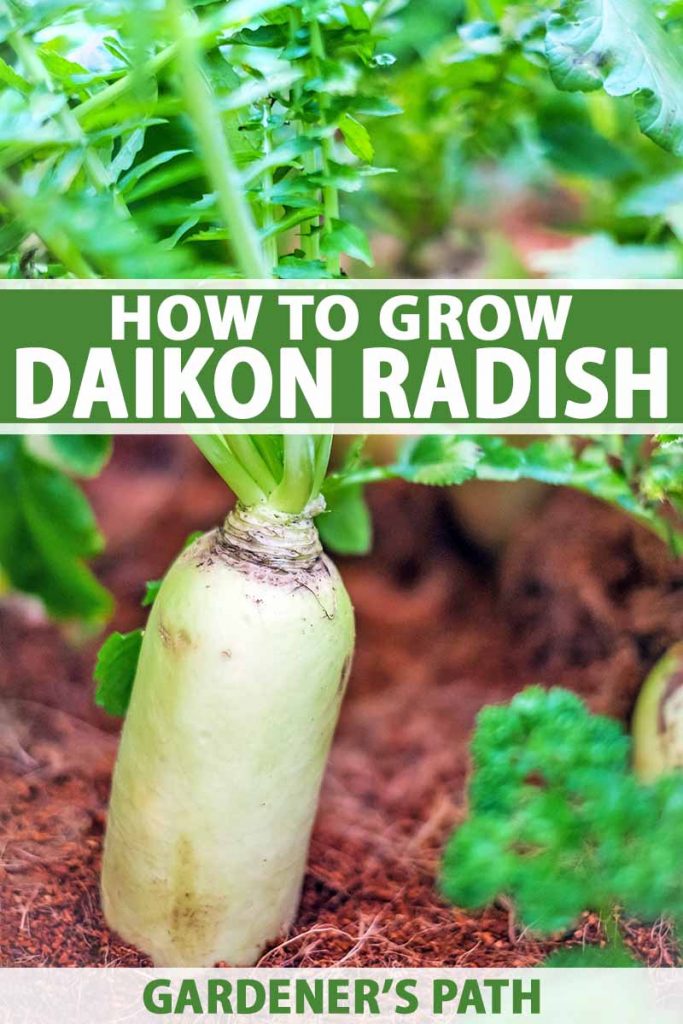
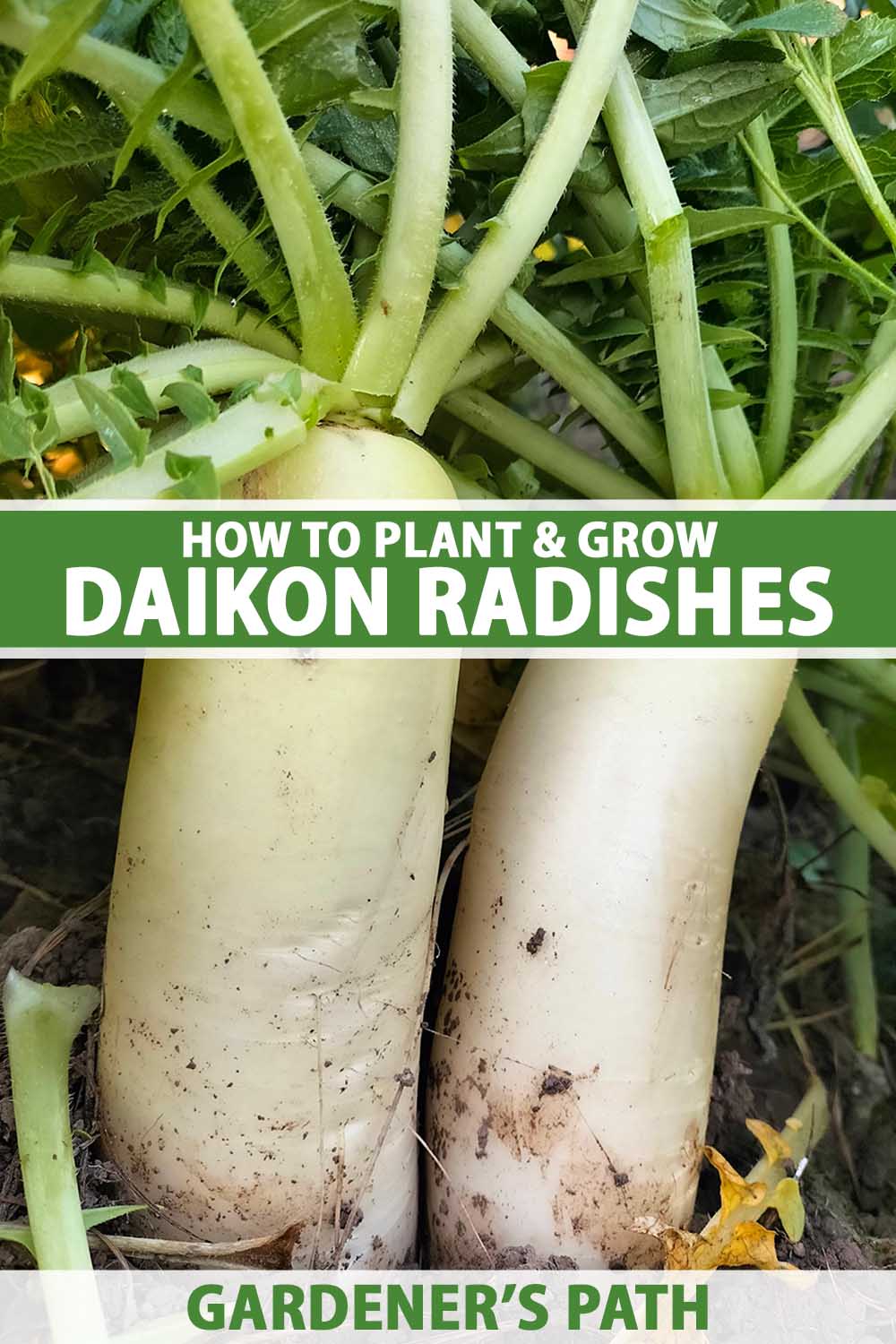
Raphanus sativus var. longipinnatus
It has always seemed to me that daikon radish is one of the easiest fall crops to grow.
Sometimes I’ve sown seeds and forgotten about them, only to return to large white roots.
These radishes require little upkeep and store well. During the dark of winter, I love munching on them to add some zing to an otherwise dreary day.
We link to vendors to help you find relevant products. If you buy from one of our links, we may earn a commission.
Also known as winter radish, daikon make a very good cover crop, helping to break up compacted soil in fallow beds.
They are just as easy to grow as the table radishes we all know and love.
If you’re ready to learn more about daikon and how to grow these tasty roots, here’s what I’ll cover:
What You’ll Learn
Daikon is a specific type of radish characterized by its large root.
It’s no surprise that its name comes from two Japanese words: dai, which means large, and kon, which means root.
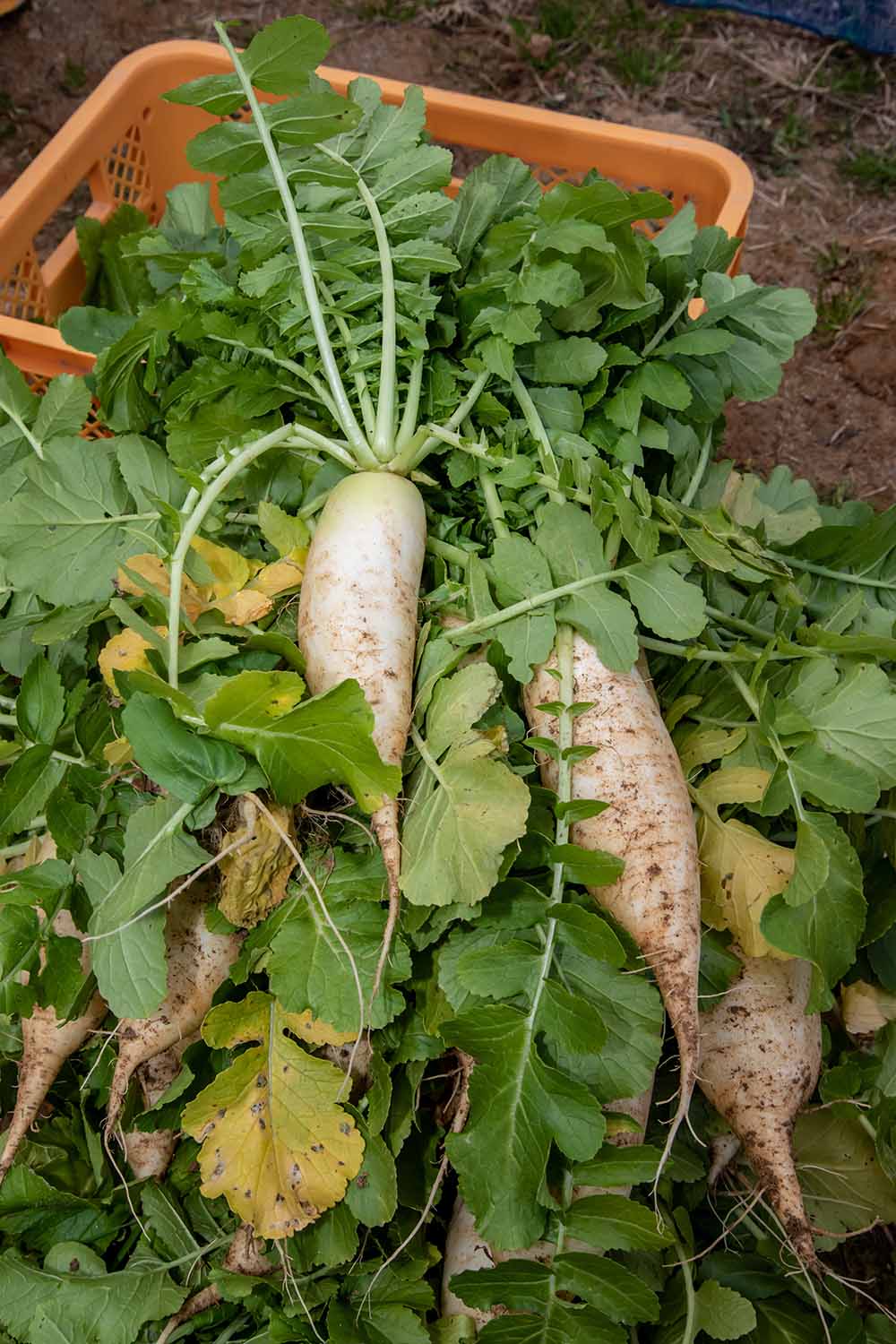
It also has a longer date to maturity than other types of radish, which makes sense for its larger size.
Like all radishes, it is a member of the Brassicaceae family. Daikon also goes by other names including white radish, Chinese radish, and Japanese radish.
Quick Look
Common name(s): Daikon, Chinese, Japanese, tillage, white, and winter radish
Plant type: Biennial root vegetable
Hardiness (USDA Zone): 2-11
Native to: Mediterranean, East Asia
Bloom time / season: Spring and fall
Exposure: Full sun to part shade
Soil type: Organically-rich, loamy, well-draining
Soil pH: 5.8-6.8, slightly acidic
Time to maturity: 40-70 days
Spacing: 4-6 inches
Planting depth: 1/4-1/2 inch (seeds)
Mature size: 10-20 inches high by 6 inches wide
Water Needs: Medium (1/2 an inch per week)
Taxonomy
Order: Brassicales
Family: Brassicaceae
Genus: Raphanus
Species: Sativus var. longipinnatus
Although daikon is widely grown and consumed throughout East Asia, it is thought to have originated in the Mediterranean.
These radishes soon made their way to countries including China, Japan, and Korea sometime during the third or fourth century.
Since then, they have been a mainstay in certain Asian cuisines, appearing in dishes including stews, stir fries, and ferments.
Daikon is a winter radish, meaning it grows best when it is allowed to mature in colder weather.
Therefore, it is typically planted in mid-summer to early fall, depending on your growing zone.
As mentioned, these radishes are often used as cover crops to loosen soil and reduce erosion. This has given them the name tillage radishes.
How to Sow
As with other root crops, these are best grown via direct seeding. The date when you should plant seeds depends on your growing zone.
Daikon radishes can be grown as annuals in USDA Hardiness Zones 2 to 11.
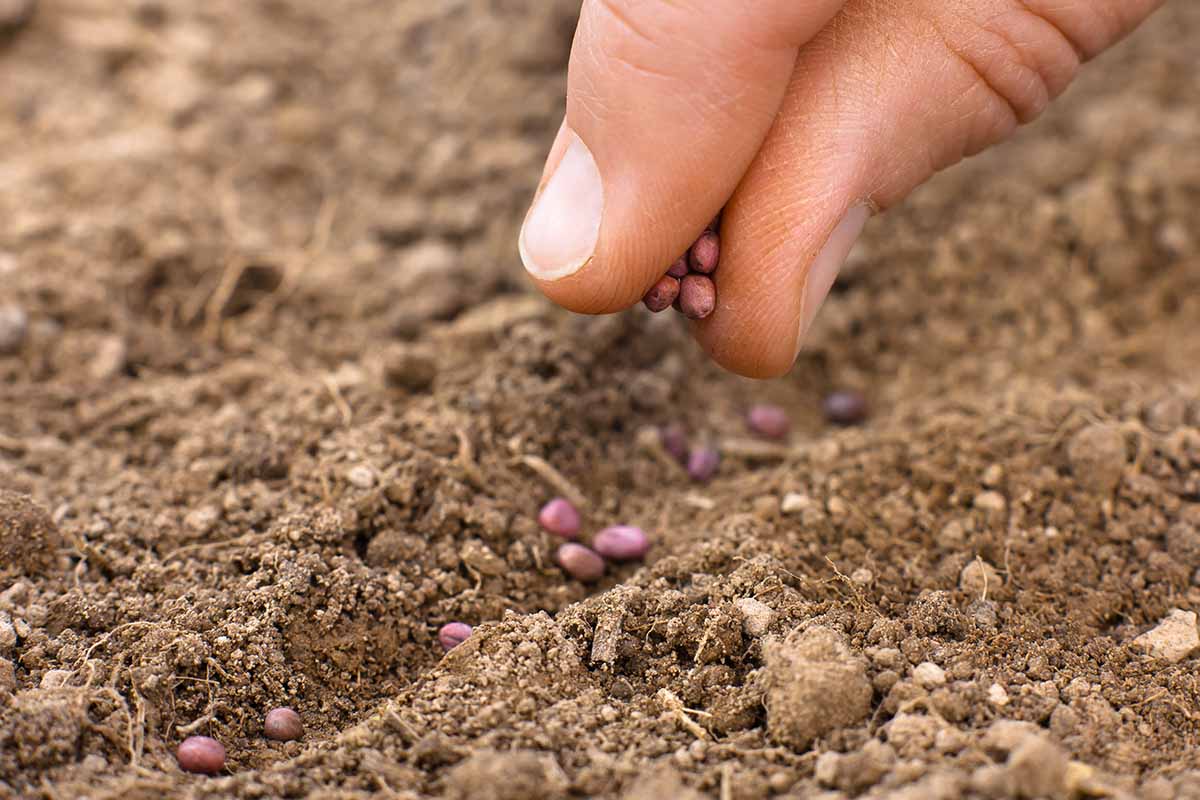
Aim to sow seeds around two months before your predicted first frost date. This will ensure plants mature in time for harvest.
No matter where you are located, sow one seed every inch in rows 12 to 18 inches apart. Seeds should be planted at a depth of quarter to half an inch.
How to Grow
As mentioned above, this crop is best grown via direct seeding. Before you plant the seeds, you want to make sure you prepare the soil.
Daikon radishes grow best in soil with a pH of 5.8 to 6.8.
Although their roots can loosen compacted soil, if you’re growing these root crops to eat, they grow best where soil is already loose.
If your soil is compacted, consider loosening it with a broadfork before planting.
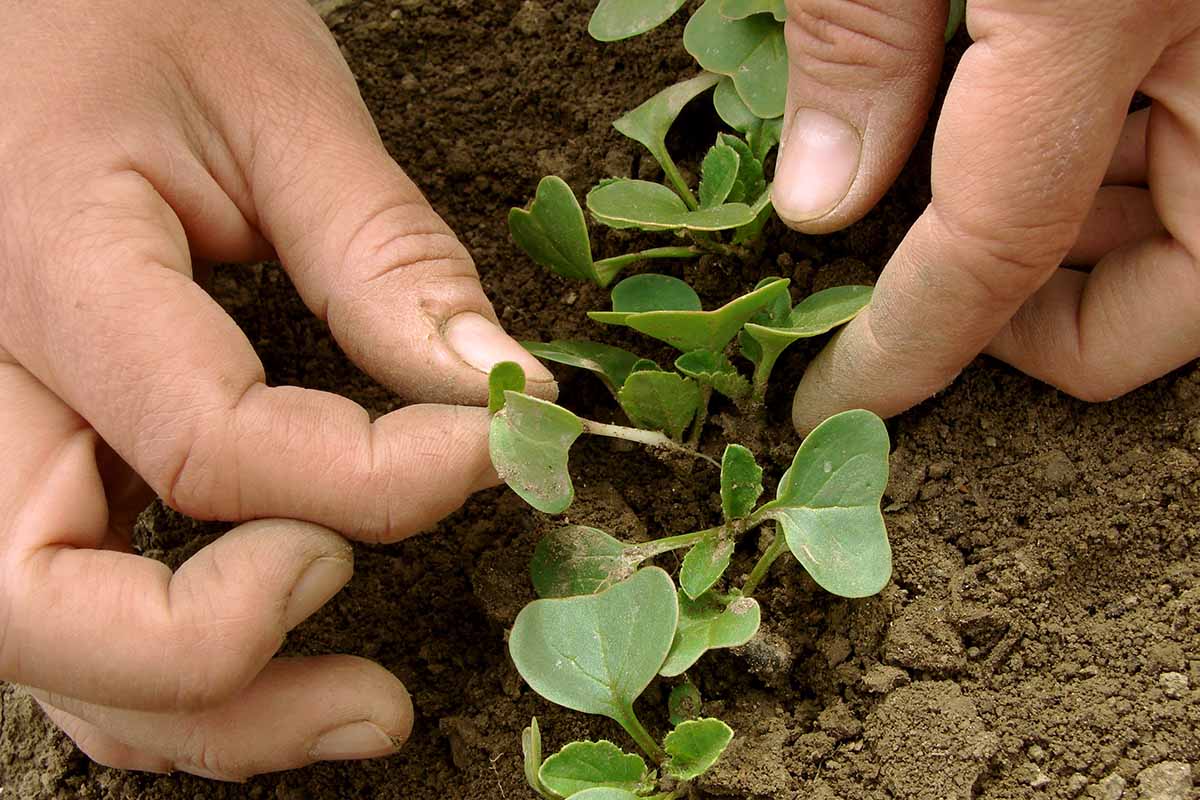
Since you will be harvesting the roots, avoid applying excessive amounts of nitrogen fertilizer. Too much nitrogen will grow large greens but small roots.
Choose a full sun to partial shade location for best results.
After you sow your seeds, make sure you keep the soil moist, and they will germinate within a few days. Within a week of germination, thin seedlings to four to six inches apart.
Water should be provided every few days in the absence of rain. You are aiming for moist, but not wet, soil.
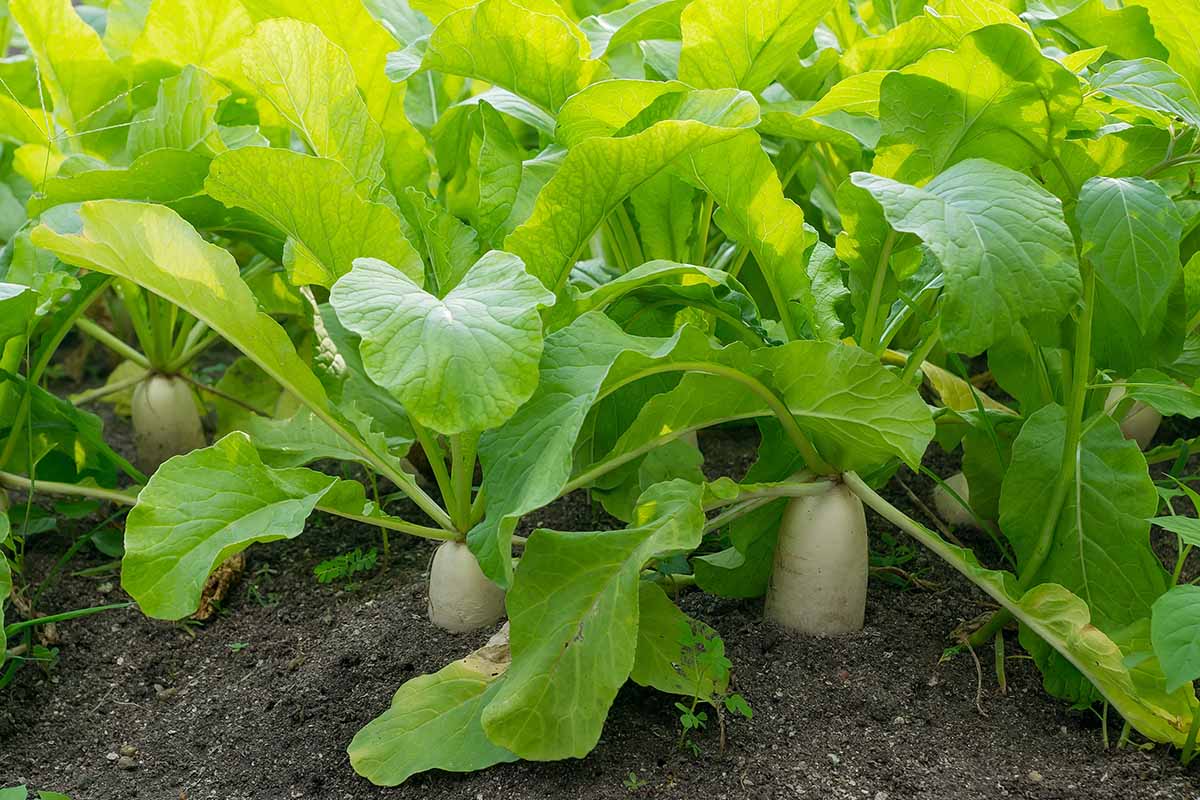
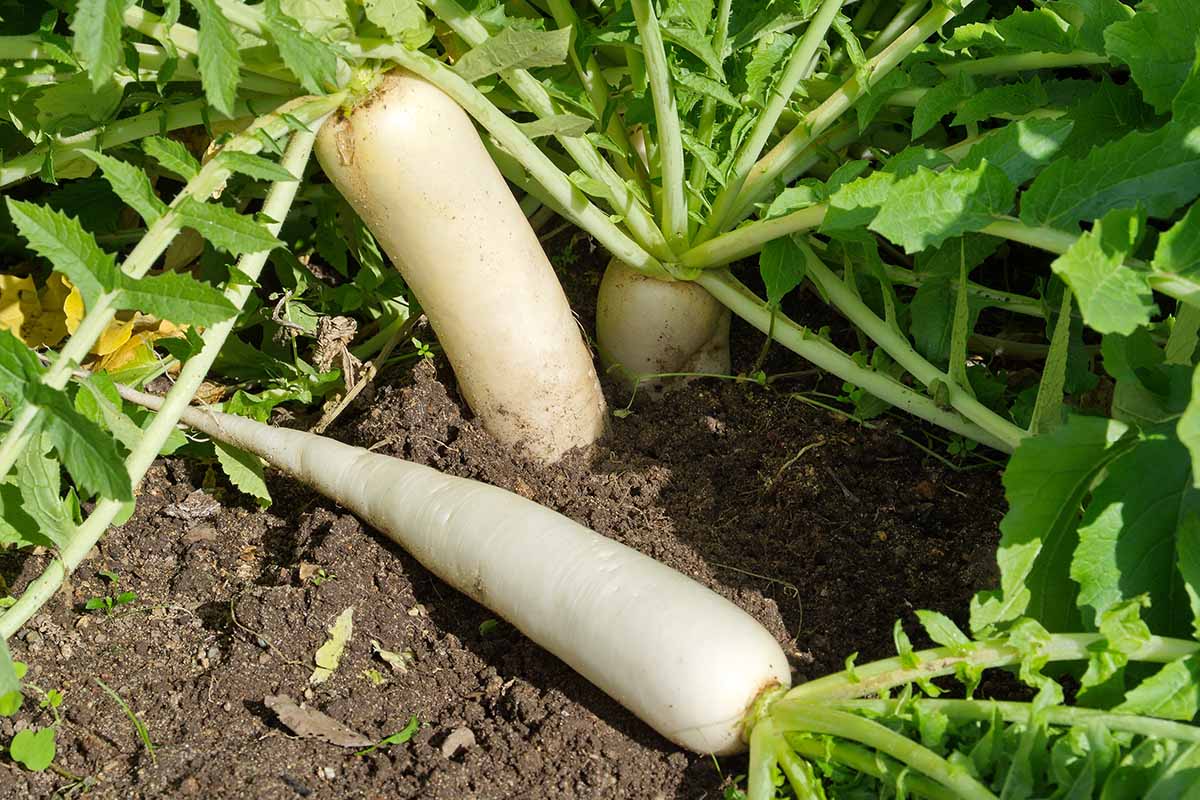
Plants will mature in 40 to 70 days, depending on the variety. Don’t fret if part of the root is visible above ground, this is normal.
Cultivars to Select
Daikon come in three main types: oblong, tapered, and round.
Some are rounded with nearly the same circumference from top to root, others have more of a narrow and tapered shape similar to a carrot, and you can find those that are nearly spherical.
Cultivars also vary in root color, with most being some combination of white and light green.
Japanese Minowase
This heirloom variety produces oblong roots that can grow up to two feet in length. The roots are all white, and can be stored for multiple weeks after harvest.
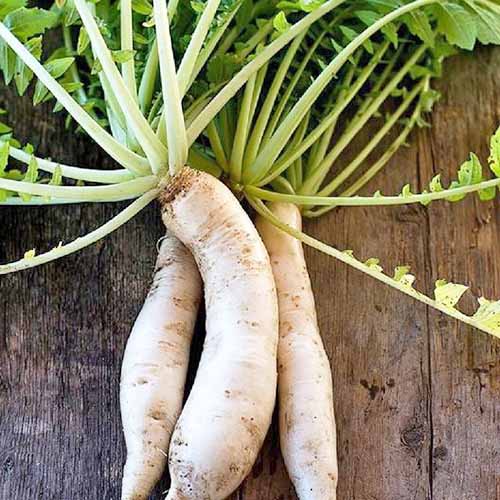
Ready to eat in 45 to 60 days, ‘Japanese Minowase’ is adaptable to sun or shade.
Find seeds available at Eden Brothers in a variety of packet sizes.
Long
This extra long selection has white tapered roots with light green tops. It grows up to 14 inches long.
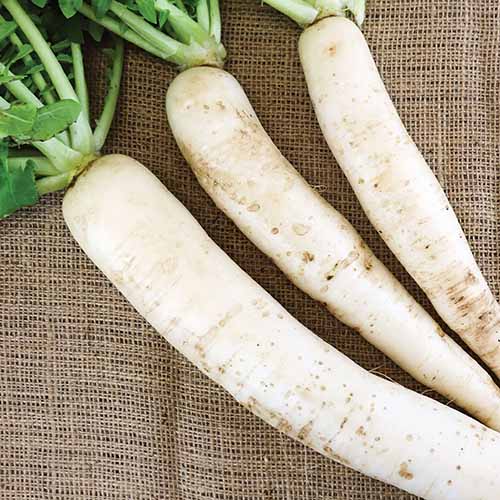
Expect about 60 days to maturity. It can be grown in the spring as well as in the fall.
You can find packets of 300 seeds available at Burpee.
Red
This variety has oblong roots that grow five to eight inches long. The exterior of the roots is bright red while the interior ranges from white to pink.
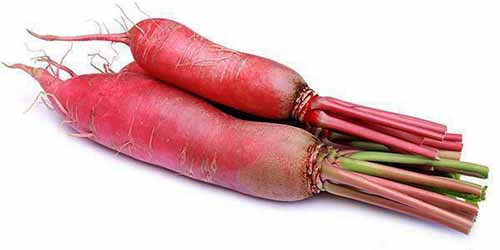
Red is an heirloom cultivar that you can expect to be ready to harvest in as little as 30 days.
You can find seeds available at True Leaf Market.
Watermelon
An heirloom variety with a round bulb, this type is the star of the show when added to any salad or platter of crudités.
White or light green on the outside, slicing into these roots reveals bright pink flesh that is reminiscent of a watermelon.
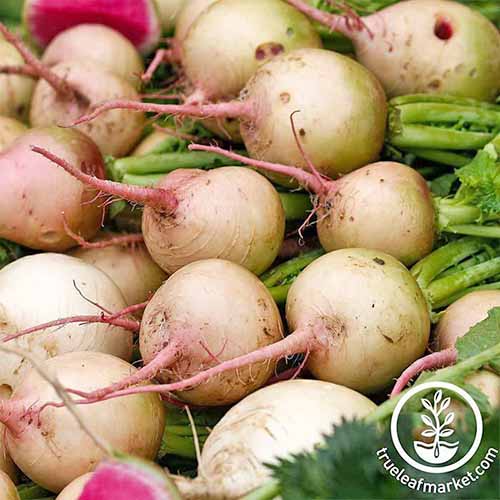
These can be harvested when they reach golf ball size, or leave them in the ground longer for whopping grapefruit-sized roots. Expect 30 to 80 days to harvest.
Seeds are available from True Leaf Market.
White Icicle
Icicle radishes form white, narrow, tapered roots that reach about five inches in length at maturity. And this cultivar grows quickly – you can expect a harvest in just 27 to 35 days!
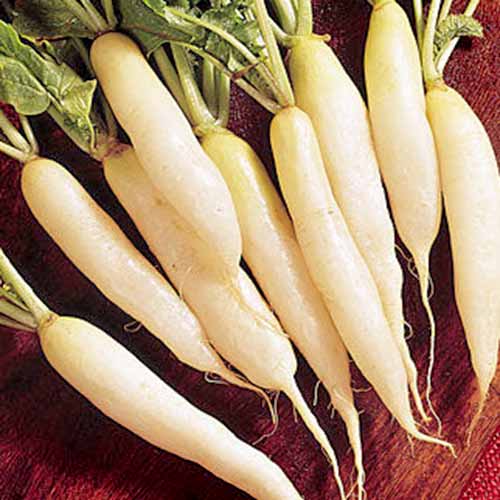
With a mildly pungent flavor, Burpee rates this cultivar as “Best in Class.”
You can find packets of 650 seeds available from Burpee.
Pests and Disease
Pests generally don’t bother these root vegetables too much, there are some that still pop up occasionally.
Pests
Different types of insects may go after the leaves as well as the roots. Luckily, they don’t usually cause too much damage.
Cabbage Maggots
If you pull up your daikon only to discover that they are damaged, the cabbage maggot is likely to blame. These pests are the juvenile form of small flies.
An effective method of excluding insects from your crops is to use floating row covers.
Read more about cabbage maggot control here.
Flea Beetles
Flea beetles are little bugs that feed on foliage.
If you see small holes in the leaves, take a closer look. You will probably see the beetles themselves – they are tiny, up to a quarter of an inch in size.
Read more about flea beetles and how to control them here.
Harlequin Bugs
Harlequin bugs may look pretty, but they can really do some damage to your crops. They are orange and black with shield-shaped bodies, and they feed on leafy greens.
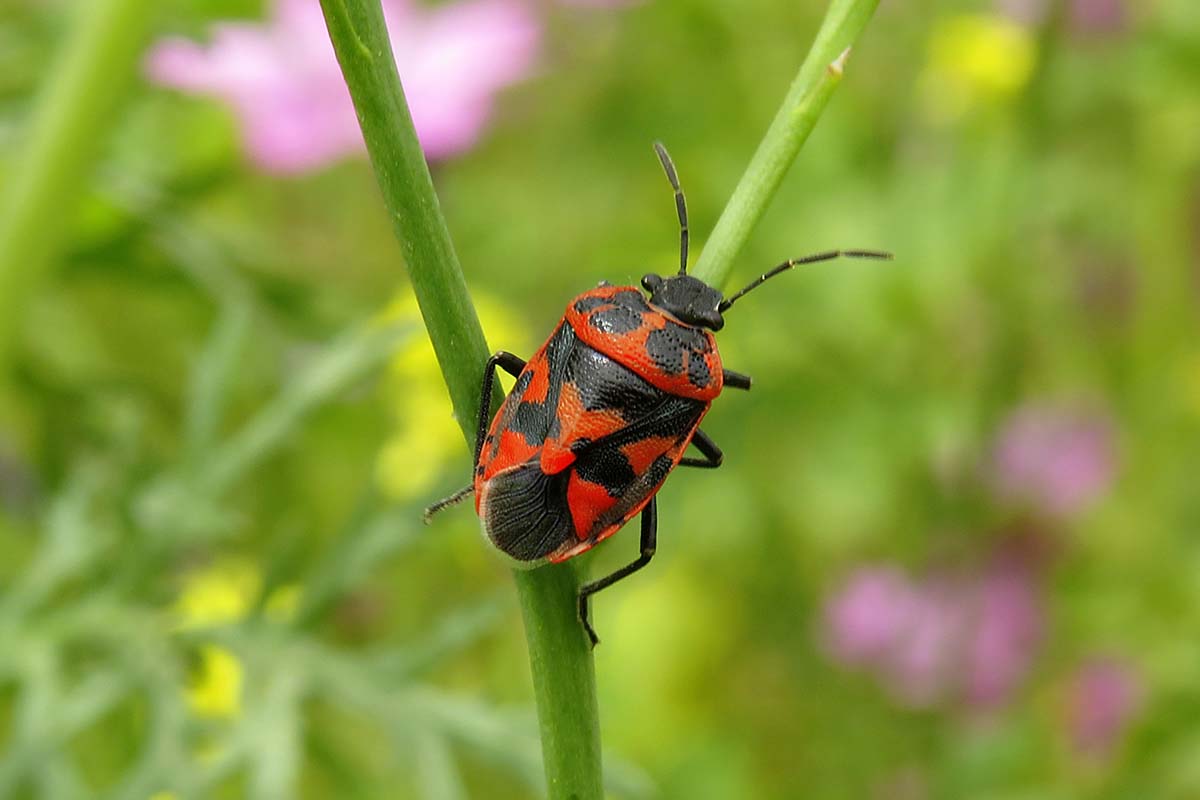
If you only see a few bugs on your plants, simply pick them off and place them in some soapy water.
If these pests take over your crop and require more intense intervention, they can be treated with a spray of neem oil, pyrethin, or insecticidal soap.
Disease
All parts of the daikon plant are susceptible to disease, both above and belowground. Again, these issues won’t usually prove to be too much of a problem for your crop.
Septoria Leaf Spot
If you see yellow spots with gray centers on your radish leaves, they are probably infected with this fungus.
The best treatment is to remove infected leaves and/or plants. This will stop the spread of the fungus.
Black Root Rot
This fungus attacks the roots, turning them black and distorted.
If it affects small seedlings, the plants may die. Unfortunately, this disease cannot be treated once it is spotted on your plants.
However, it can be prevented using cultural methods. Don’t overwater your crops and make sure they are planted in soil with good drainage.
Since this fungus affects multiple Brassica species, make sure you don’t grow brassicas repeatedly in the same area.
Harvesting
Check your seed packets for the estimated time to maturity of the cultivar you are growing.
Although daikon has more of a capacity to grow large while maintaining quality than traditional radish types, they can still become pithy and spongy if left to grow too big.
Be sure to harvest before this happens.
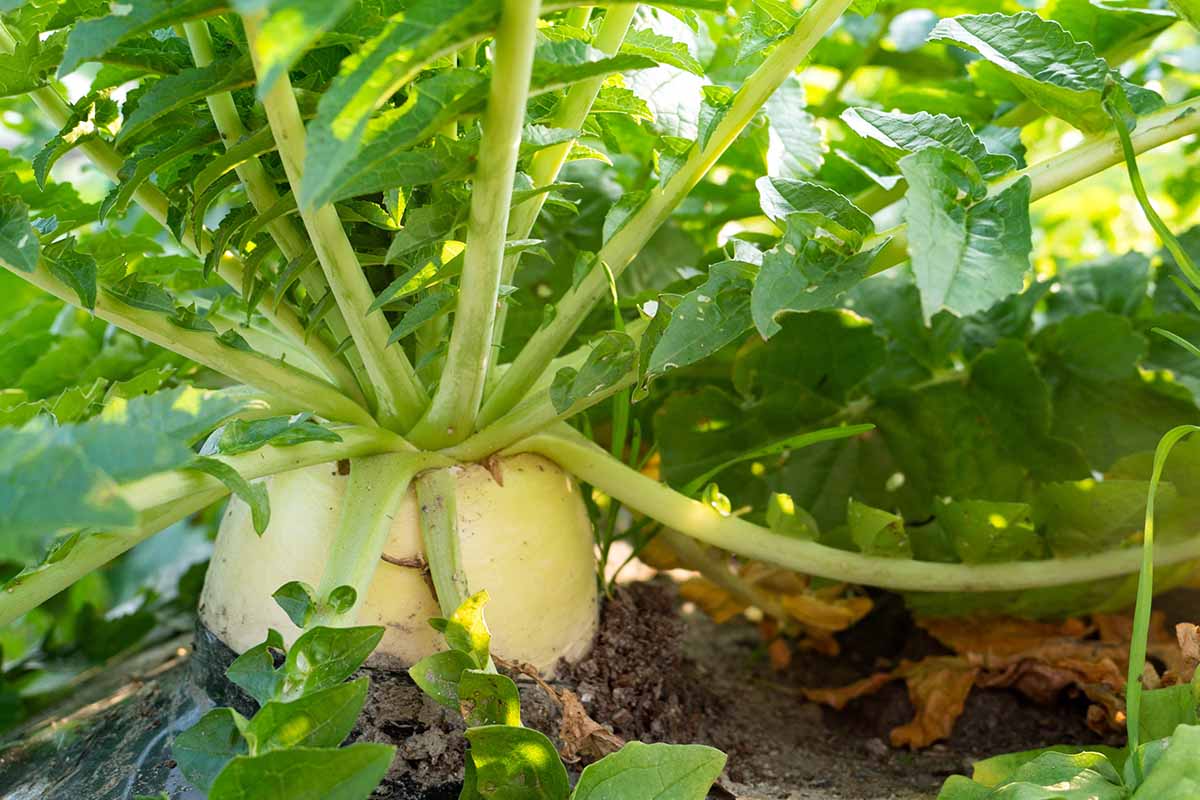
If hit with hard frosts, the radishes will become spongy or end up rotting. However, the time to harvest can be extended by protecting plants with floating row covers.
Varieties with long and slender roots are fragile and susceptible to snapping. You can prevent them from breaking by loosening the soil with a pitchfork, broadfork, or shovel.
Once your soil is adequately loose, grab the leaves where they meet the tops of the roots and gently pull. Now’s the moment when you get to see just how big the roots have grown!
When the plants are pulled from the ground, cut off the leaves at their base. With the leaves removed, the roots can be stored for multiple weeks under the right conditions.
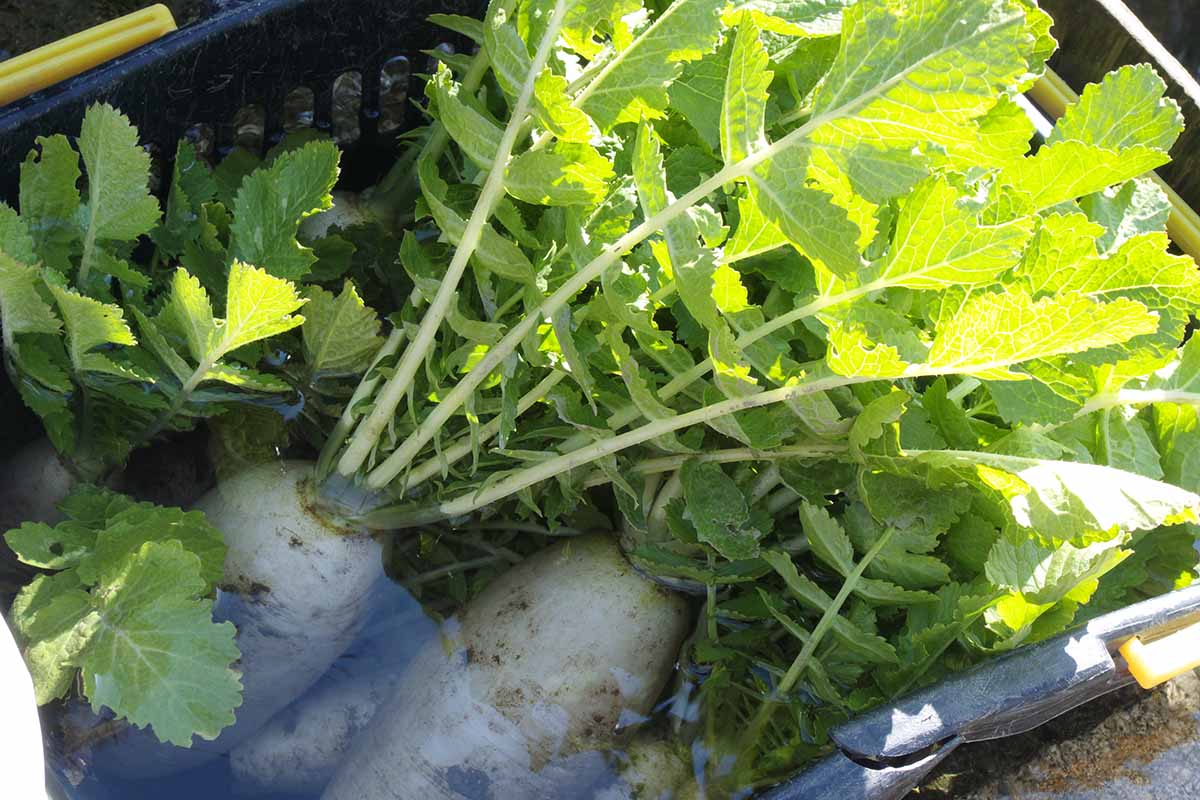
To increase the storage life of your radishes, avoid washing the roots or leaves until you are ready to use them.
Daikon is best stored in a cold, moist environment. You can place the roots in the refrigerator with a damp paper towel or cloth.
Leaves can be stored in a zip-top plastic bag in the crisper drawer of your refrigerator for a few days.
Preserving
These radishes are often fermented complete with their edible greens to be eaten as a type of pickle.
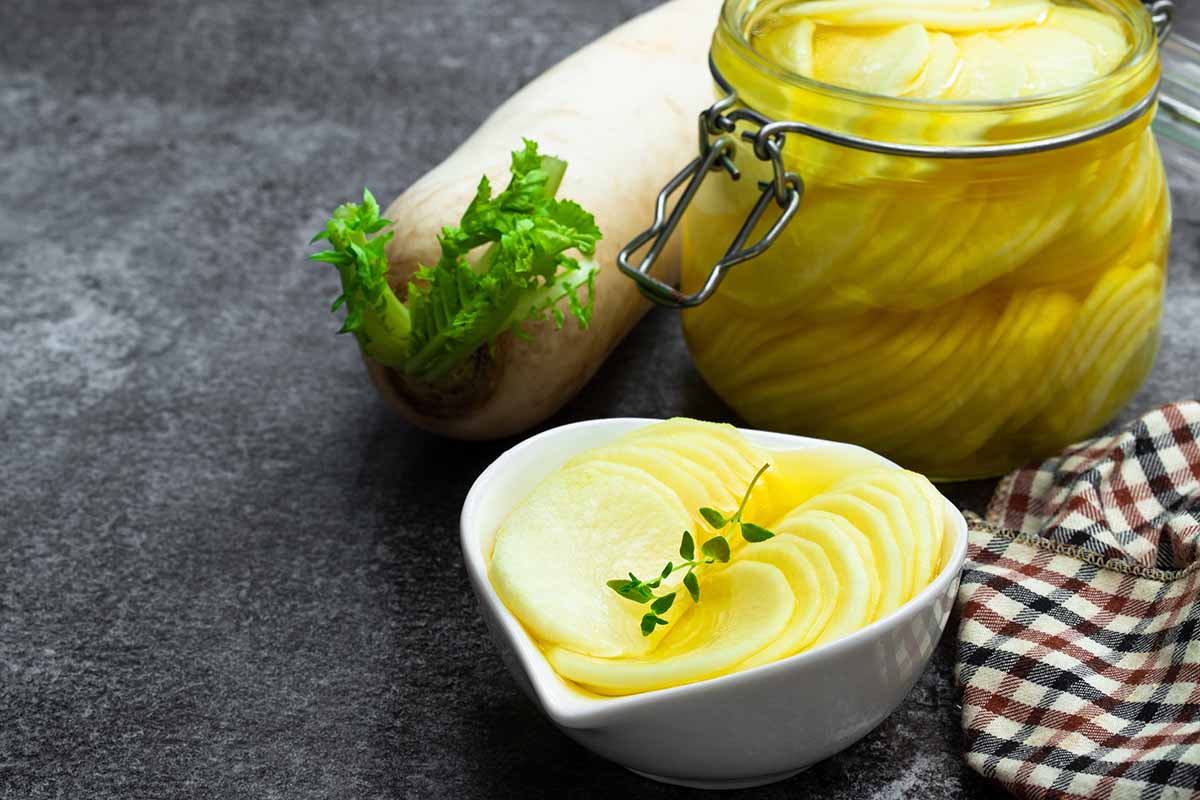
They are also used as a component of Napa cabbage-based kimchi.
Fermenting is a simple process that only requires three main ingredients: salt, water, and time.
You can read more about fermented foods on our sister site, Foodal.
Recipes and Cooking Ideas
Daikon radish is a versatile vegetable in the kitchen. It can be eaten raw or cooked, and all parts of the plant can be consumed.
You do not need to peel the roots, though some people choose to do so.
One simple way to eat daikon is to slice it up raw into discs that can be dipped in hummus or ranch dressing.
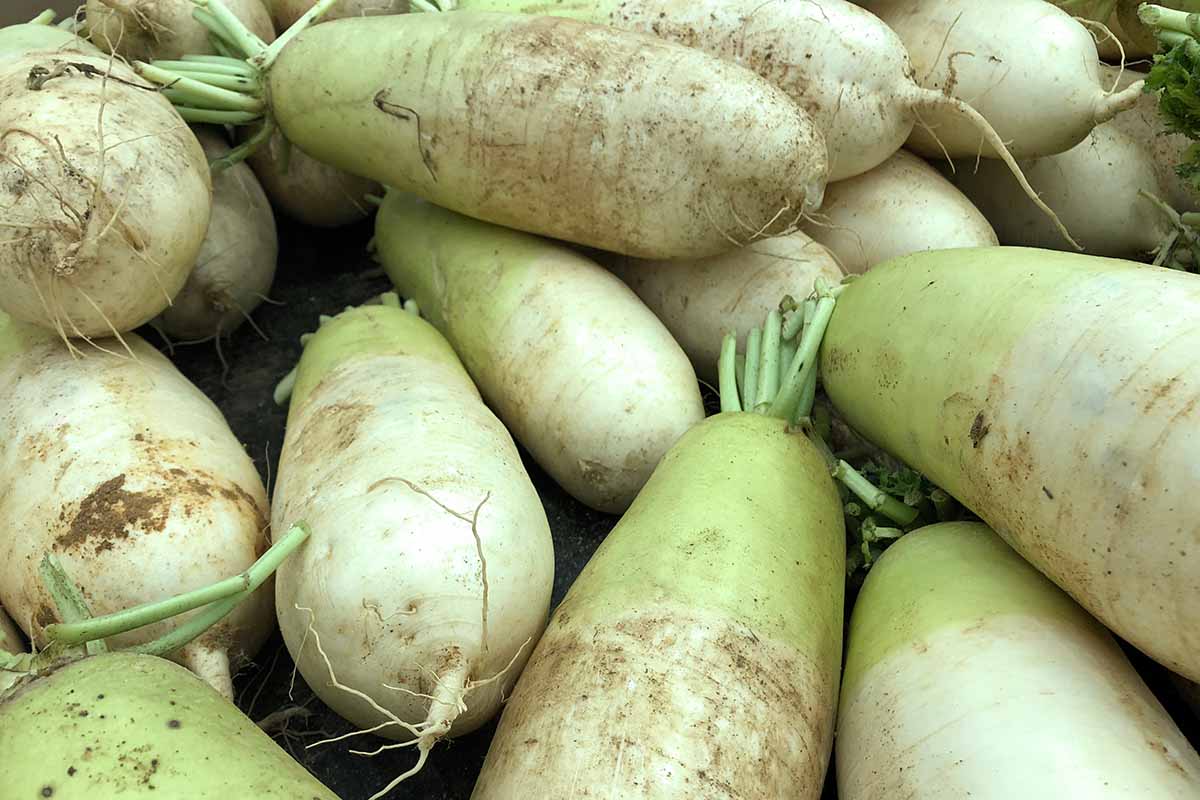
Alternatively dice it into half-inch cubes and then saute them in oil with garlic and ginger for a few minutes.
Remove from the heat and toss with rice noodles, soy sauce, sesame oil, and your favorite fresh diced hot pepper or hot pepper flakes.
Thanks to their rough texture, the leaves are best enjoyed cooked – sauteing and steaming works well. They make a great addition to Thai-inspired coconut curries.
Daikon sprouts can also be used in salads and sandwiches. See our article on sprouts and microgreens for more information.
Grow Some Giant Radishes
Now that you know how to plant and grow these large radishes, it’s time to add them to your fall garden. You’ll be impressed with their size and how easy they are to grow.
To see how this crop can fit in with the rest of your fall plans, check out some other cool-weather-loving crops here!
Are you growing daikon? How do you like to use the roots? Let us know in the comments section below!
And if you want to learn more about growing radishes, have a read of these guides next:


My daikon radish plants have flowered. Does this mean they have bolted and will taste bitter or not develop the root vegetable at all?
Where are you gardening, Karen? Radishes can be difficult to grow in hot weather, and they’re likely to be woody (or spicy!) if they’ve bolted, with under-developed roots.
I am from Kern county, California. We harvested Daikon one month ago, but most of Daikon root are not that long. I will attach a pic, plz check it.
Now we sowed Daikon seeds again in the beginning of October, do you have any tips to harvest high quality Daikon radish, like soil, compost, fertilizer, and other tips? And what should we notice when growing Daikon radish?
Thanks a lot.
Thanks for your message, sansan. Length at maturity can depend in part on the type that you’re growing, as well as the growing conditions, as you’ve suggested. I’d suspect if they were short they were picked too early, too dry/irrigated inadeauately, and/or they were grown in soil that was too compacted. Summer isn’t really the best time for radishes in most parts of CA but they’ll probably do better as a cool-weather fall crop. The soil should be loose and fertile before planting, but avoid amending with fertilizers that are high in nitrogen since this is a root vegetable. A… Read more »
Hi Allison, thanks for your answer. I thought we planted them so early last time, and because of watering too much, those Daikon radish suffered black rot disease, do you know how to water Daikon in their growth stage? Like when should I water more, but when should I water little? Also how to apply fertilizers and what kind of fertilizer? Looking forward to your reply, thanks.
Watering can be tricky since daikon benefits from a lot of moisture, but they don’t like sitting in standing water either. Consistency is key here – you don’t want to allow your crop to dry out. Make sure the planting area drains well, use a rain gauge so you can monitor precipitation, and consider using a moisture meter to check the levels in the soil (or stick your finger or a wooden ruler a few inches down every couple of days to check). Applying mulch around your plants can help to retain moisture. I hope you’ve also taken precautions to… Read more »
Thanks for your help, Allison. I got a lot from what you shared.
You’re welcome!
Hi Allison,
Our radishes are encountering different problems recently. There are many hairy root and it seems the main root is not that strong or long… they are not growing well, I will attach some pics together, plz check them. Have you ever had such problem also?
Hi Sansan, can I ask how close you put the radishes when you planted? Those that are placed too close together might be weak and small, and they tend to form an excess of side roots rather than a large taproot.
I’m from kern county also. When did they flower because I still haven’t seen a flower on mine and we are 1 day from October.
Hi Jose, radishes are biennials. They shouldn’t flower in their first year unless something causes them to become stressed. Then, they will bolt and form flowers. Otherwise, they shouldn’t bloom until the second year.
Thanks for the information! I had some questions about growing radishes and I think this answered most of them 🙂
Thanks for the kind words Tyler! Happy gardening.
Very interesting and helpful. I am growing white icicle daikon in my bedroom salad garden under LED lighting. What I picked early was nice but that after 5 weeks like bamboo. I am doing well on butter crunch lettuce, mustard and bok choi with some arugula. My image shows green and red Malabar from the pot. This project is a labour of observation and learning and I would welcome any advice on what and how to grow for maximum productivity. I live northeast of Ottawa Canada.
White icicle radishes mature quickly, and five weeks is probably a bit too long to leave them in the soil – they’re often picked at around 30 days, which explains the woody texture that you experienced.
Wishing you the best of luck with the greens and other veggies in your indoor garden! You might want to check out our guides to indoor gardening to find tips and suggestions for other edible crops like herbs and root vegetables, or type “indoor” into the search bar. Growing peas can be a fun indoor project, for example!
My daikon have formed a stalk with a flower bud on top. Should I pick it off?
I thought I posted this comment before, but I don’t see it, so am posting again. Sorry if it’s there already, but I see flower stalks have formed but not yet bloomed on my daikon. Should I pick them off and let the daikon keep growing? I live in central Arizona and have a raised bed for my veggies. They look good so far.
Hi Patti, when radishes form flowers, we call it “bolting.” It means that the plant is trying to complete its lifecycle by going to seed. While you can cut off the flower, it doesn’t really change the fact that the root is going to start turning more bitter at this point. Instead of cutting the flower, I’d recommend harvesting the root if it’s large enough to eat. Radishes bolt when the weather becomes too warm for them. I find anything above 80°F does it for my radishes. With unpredictable spring weather in warmer regions, larger radishes can be a challenge.… Read more »