
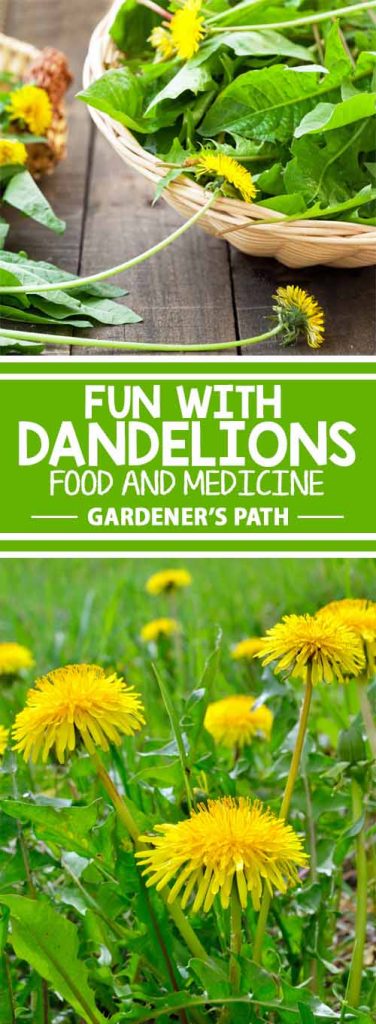
As cheerful and innocuous as I think the lowly dandelion is, it ranks among America’s most hated plants.
People will resort to almost anything to get rid of them, from prying them up by their seemingly endless taproots to dousing them with toxic chemicals. The things we’ll do for a pure lawn.
It’s not that dandelions are toxic, covered in spikes, or damage-causing. Their major sin seems to be that they reproduce like rabbits.
They’re certainly not awful enough to warrant the gallons of toxic chemicals we dump on our lawns to get rid of them.

We link to vendors to help you find relevant products. If you buy from one of our links, we may earn a commission.
Ever since this opportunistic herb jumped ship wherever European settlers went, it has been making itself at home far and wide.
By 1672, it had already established itself throughout New England. But along with dandelions, Europeans brought along aspirations for flawless grass lawns, and by the 1800s, people were scrambling to eradicate this cheerful invader.
But as most modern herbalists know, the dandelion is, in fact, a tasty, nutritious, useful, and above all, healthful herb.
The roots are rich in inulin, and the leaves have tons of calcium and vitamins A and K, along with carotene, calcium, potassium, phosphorus, and magnesium – they’re some of the most nutrient-dense greens out there.
And the flowers aren’t just there for looks, either. They contain lutein, beta-carotene, and flavonoids.
Inulin, in particular, has become super trendy in recent years as a prebiotic that can promote the growth of beneficial bacteria in the gut.
The leaves serve as a diuretic, helping our bodies to flush water and sodium, which can reduce bloating, lower blood sugar, and help to prevent kidney stones.
All parts of the plant are anti-inflammatory and contain saponins, flavonoids, and sesquiterpenes.
In other words, this plant is a nutritional powerhouse with all kinds of goodies for your body.
There are many ways to use dandelions, both medicinally and as a food. Here are the ones that we’ll cover in this guide:
We’ve been using dandelion for a long time. Greek philosopher and naturalist Theophrastus touted its use to prevent freckles and liver spots.
Anglo-Saxons used the plant as a diuretic and a laxative, and the ancient Celts made dandelion wine.
It has been used to treat inflammation and stomach issues in traditional Chinese medicine for centuries.
As much as some people hate these plants today, they weren’t always shunned. I think these cheerful yellow flowers are poised for a comeback.
More and more, I find that people are hesitant to use chemicals – or even much energy – to remove them from their gardens.
In fact, I talk to a lot of people who know how delicious and nutritious they can be and are harvesting them from their own yards.
A Note of Caution:
If you are using chemical herbicides or pesticides on your lawn or garden, you shouldn’t eat anything grown there, as it will contain poisons which may be hazardous to your health.
Dandelions have no documented side effects, but everyone is different. As with any herb, if you have an adverse reaction, stop taking it.
For more on how to garden without resorting to bottled toxins, see our organic gardening guides.
Don’t confuse dandelion (Taraxacum officinale) with false dandelion or flatweed (Hypochaeris radicata).
They both have yellow flowers and a serrated rosette of leaves. Flatweed also spreads every bit as readily as its lookalike.
But they’re easy to tell apart if you get close. False dandelion has hairy leaves.
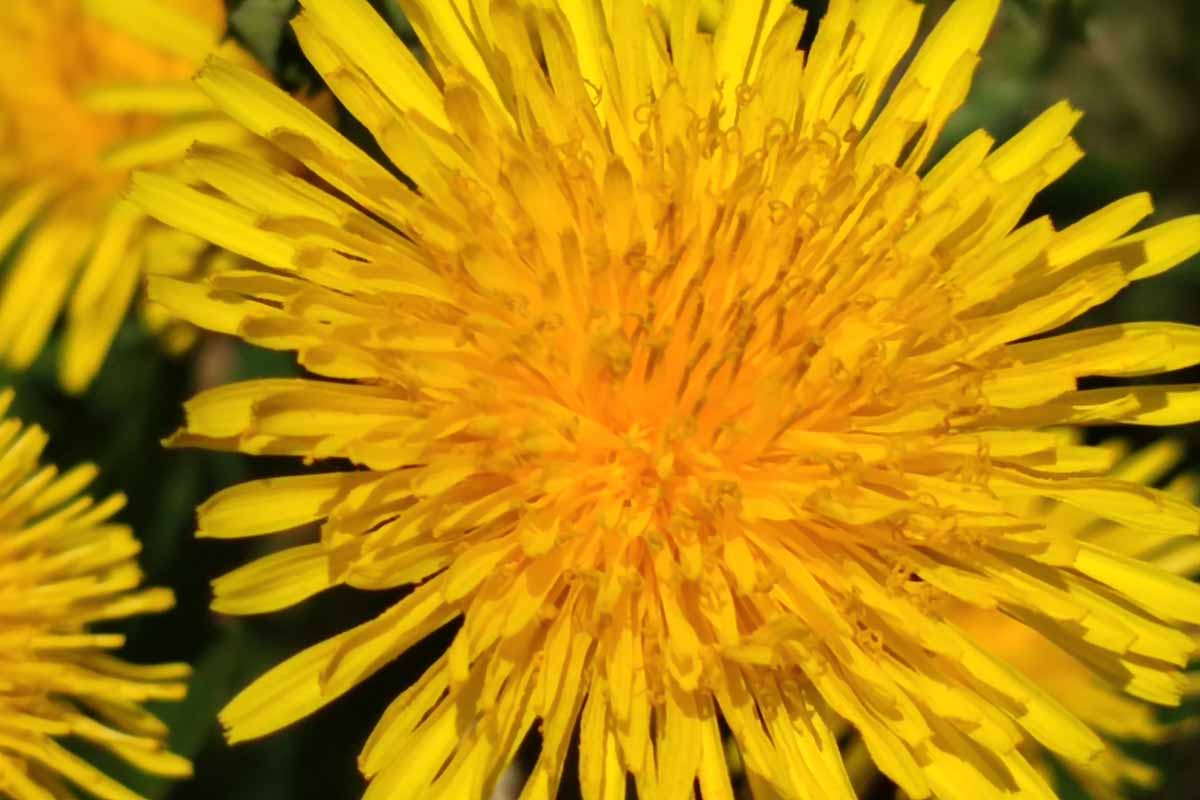
True dandelions have a dense basal rosette of lanceolate or oblong leaves. These leaves can be anywhere from two inches to over a foot long, with irregular lobes along the margin.
The inflorescence consists of yellow ray florets, and they last for just one day. After the flower matures, round, furry, white seed heads emerge.
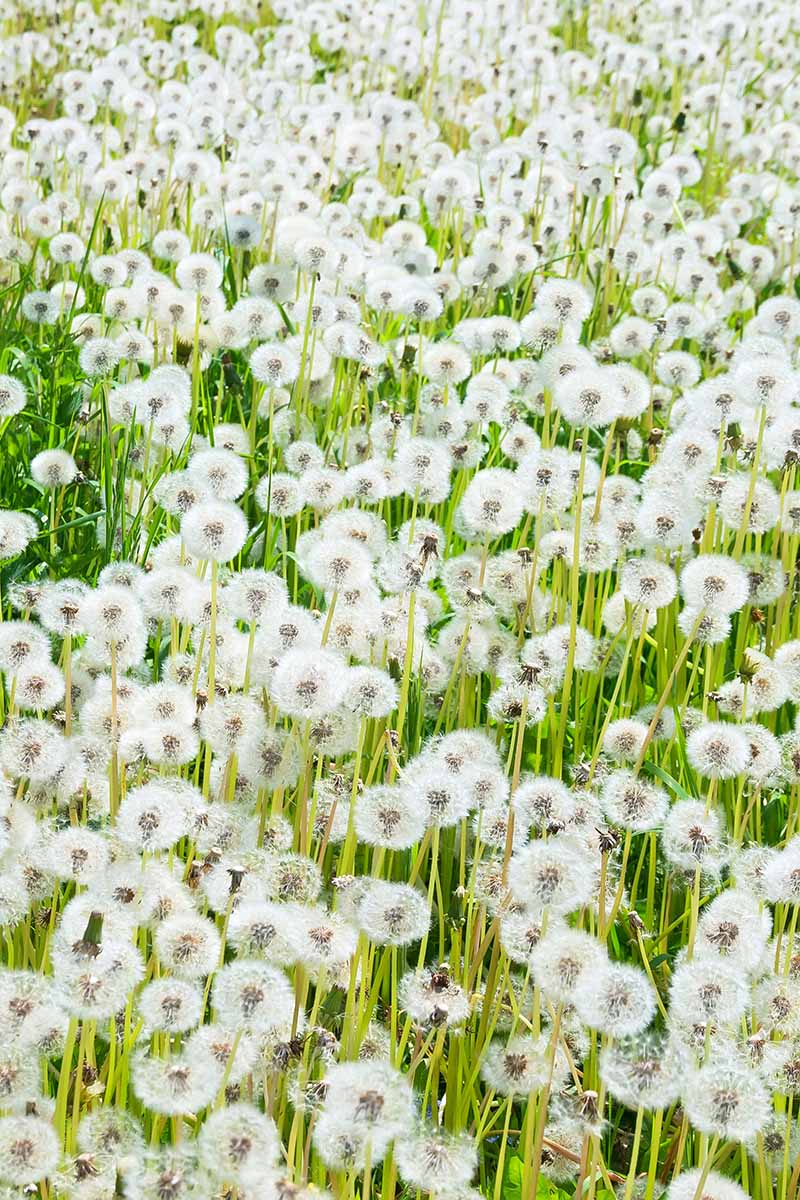
Harvesting dandelion is a cinch. The flowers sit on tender stems that can be pinched or clipped with scissors. The leaves can be pulled by hand or cut with scissors as well.
The biggest challenge in harvesting dandelion is getting those long roots out. It’s like pulling carrots, but you’re probably pulling the roots out of soil that isn’t nice and loose and loamy in this case. It’s probably going to take some work with a spade.
You want to harvest roots from plants that aren’t in flower yet. Once the plants flower, the roots start to turn bitter and woody.
When you’re looking for leaves to use, avoid those that are yellow or brown, or that show signs of fungal disease such as fungal spores or a white coating.
Generally, the young central leaves are the most tender while the outer leaves tend to be more bitter, and often more damaged.
Look for healthy, green, young leaves and snip them off at the base. Avoid the outer leaves or those that exhibit yellowing, dry spots, mold, or mildew. A little insect damage or other damage won’t hurt, just make sure the insect interlopers aren’t coming along for the ride.
All parts of the plant are edible. The leaves are bitter and a bit salty, while the flower is a bit sweet and bitter. The root is also bitter, but it depends on how you prepare it; roasting can give it a nutty flavor.
If you or your neighbors have been too diligent about removing them, you can always purchase seeds and cultivate your own dandelions.

Visit Earthbeat Seeds to pick up packets of 100 seeds to get started.
Ready to put those dandelions to use? Let’s get going!
1. Aperitif
If you’ve ever had the French liqueur Chartreuse, this recipe may appeal to you.
Just gather a whole bunch of dandelion flowers. Big, early-season blooms work best for this purpose.
Remove the sepals and retain the petals. Give them a quick swish in a bowl of water to dislodge any unwelcome hitchhikers or debris.
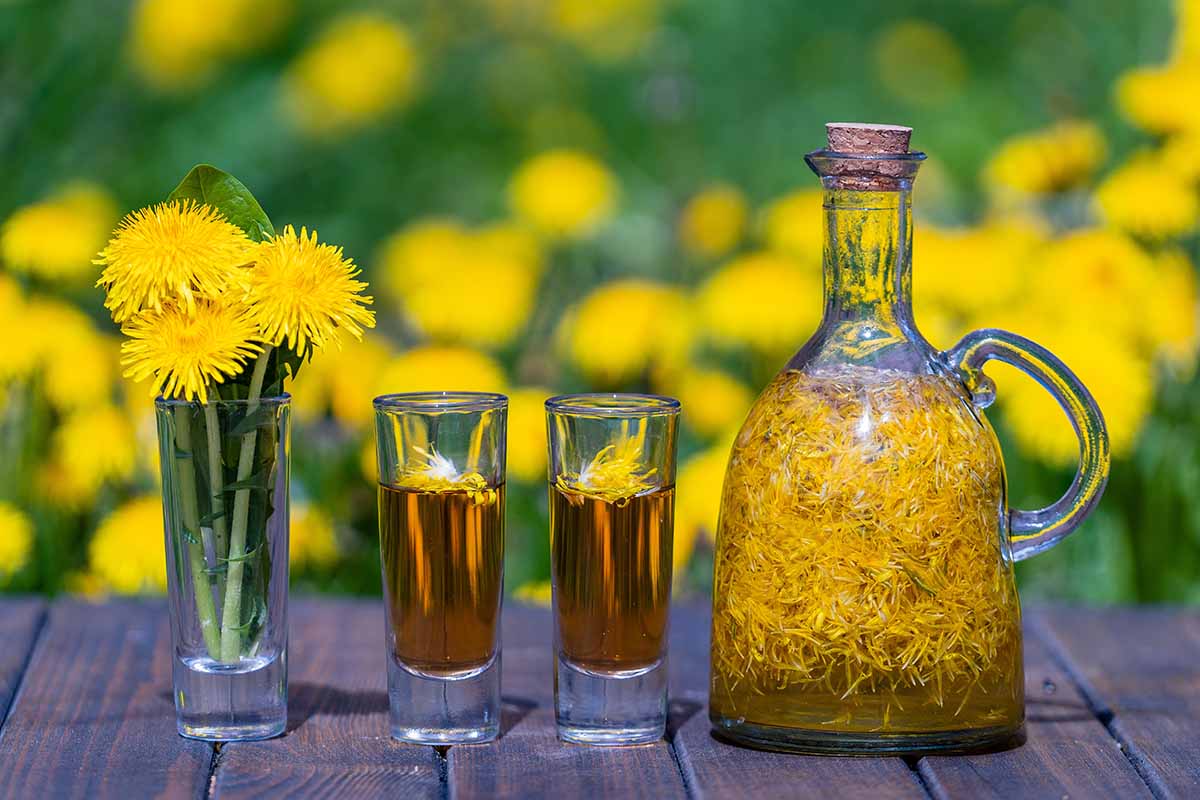
Place a cup of them in a large jar along with a quarter-cup of honey, a long strip of lemon peel, and 750 milliliters of vodka. The proof doesn’t matter, so pick whichever you like.
Cover tightly with a lid and gently agitate the jar to combine the ingredients. Place the jar in a cool, dark area and gently agitate it daily.
After two or three weeks, you can strain out the flowers. Just give the concoction a little taste to see if the flavor is where you’d like it. Add a bit more honey to taste, if desired.
Now you can enjoy your bottle of pleasant, herbal-flavored liqueur that will remind you of summer and give your heart a lift.
2. Candied Buds
Most people go for the leaves and the flowers, but don’t neglect the buds. Go outside in the morning and look for buds that are tightly compacted. Don’t pluck any that are starting to open.
Gather up about a cup of buds and rinse them clean. You can also soak them in cool water for a half hour or so to flush out any insects that hitch a ride in the buds. Dry them before cooking with them.
Heat up a half-cup of honey in a saucepan until it’s liquid and bubbling. Add the washed buds and toss to coat completely.
Pour the honey and buds out onto a parchment-lined baking sheet and spread them out. Allow the candied buds to cool and harden. Place them in a sealed container to store.
These can be popped in your mouth like candy, use them as a topping for cakes, or mix into cookie batter.
3. Capers
As with candied buds, this is a good way to use up young buds.
When the buds are tightly closed, pinch them off the plant and turn them into “capers.” These are every bit as good as the Capparis spinosa buds that you find in jars at the grocery store.
The buds that you choose should be tucked into the leaf rosette and not growing on a stem. The ones on the stem will have petals inside, and they won’t have that caper crunch. You can usually find several tight buds in each rosette.
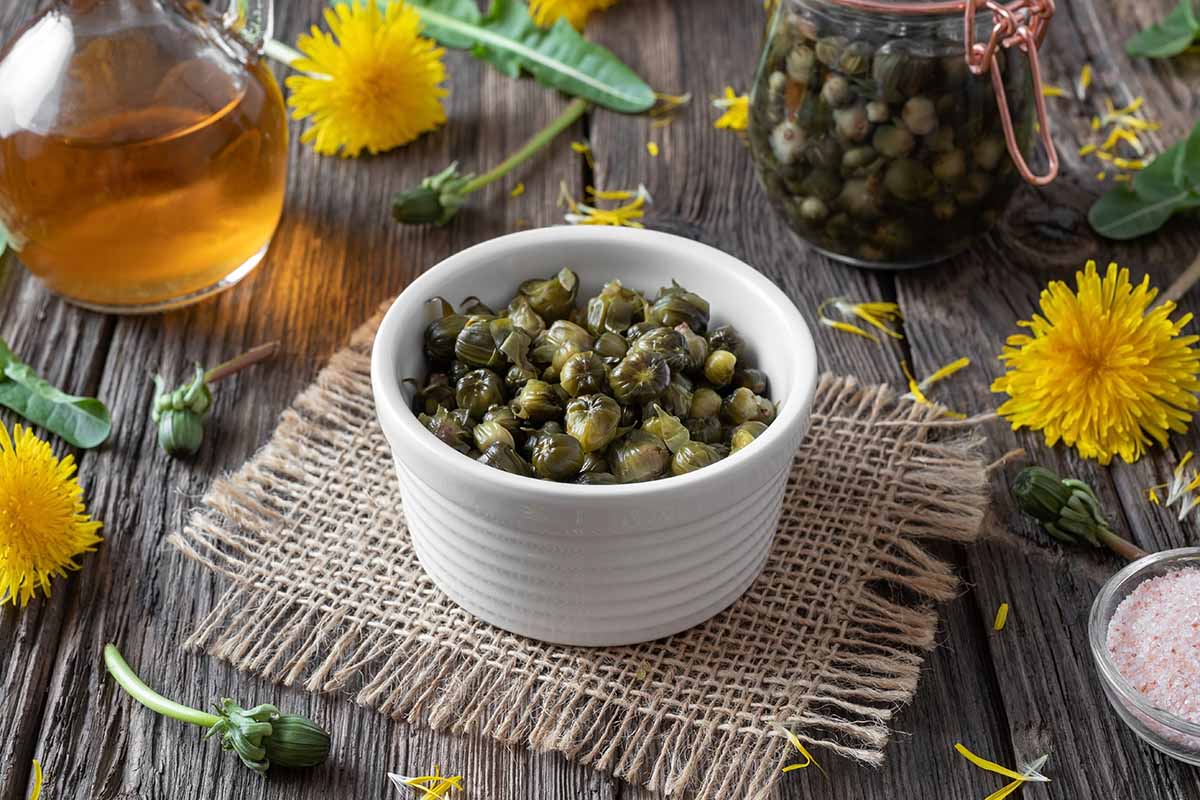
Fill a quart-size jar with buds with either cover with pure water or half white wine vinegar and half water. Add a tablespoon and a half of salt. I like coarse sea salt, but pick your favorite.
Mix everything up well and seal the jar. Let it steep for at least a week in the refrigerator before eating.
You can also can dandelion capers in a boiling water bath and store them on the shelf for up to a year. If you want a slightly more tender bud, steam them for a few minutes before putting them in the jar and adding water.
This also works with immature nasturtium seeds, which taste nearly exactly like the capers you buy at expensive specialty stores.
4. Coffee Substitute
Closely related chicory (Cichorium intybus) has been used as a coffee substitute since the 1800s. Dandelion can be used in the same way, by roasting the roots and then steeping them in hot water.
Cut off the leaves and wash the roots thoroughly by scrubbing them with a scrub brush. Finely dice the roots. You want the pieces to be about the size of coffee beans.
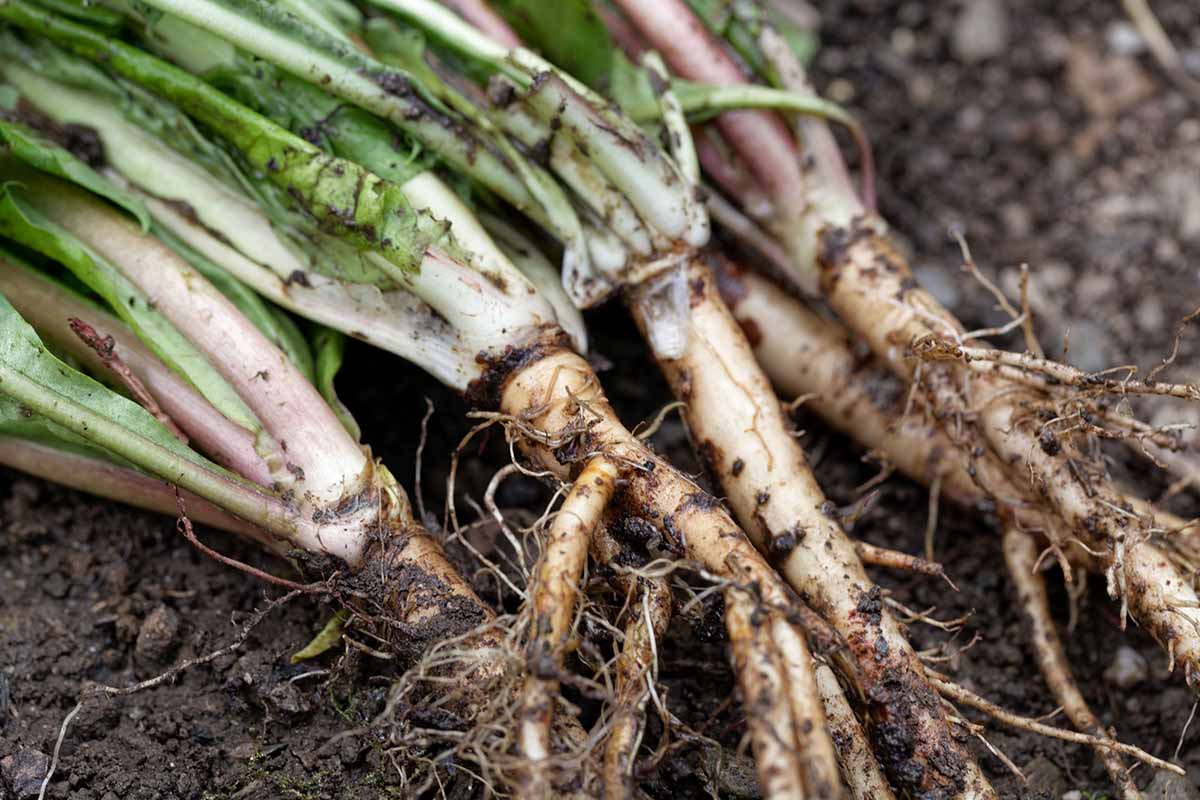
Toss out any fine hair roots, or save them for another use. These will just burn since they’re smaller than the root chunks.
Place the prepared roots on a baking sheet and roast them for 35 minutes at 375°F, or slow roast them at 200°F for two hours. The first method gives you a darker brew and the second gives you a lighter one, kind of like dark versus light roast coffee.
Keep an eye on the roots, since ovens vary. You can learn more about understanding your oven on our sister site, Foodal. You want the roots to be brown and toasty but not black and burnt.
To make a tasty brew, simmer the roasted roots in water for 15 minutes before straining into mugs. You want to use about a tablespoon of dandelion root per cup of water.
You can store the dried roots in the same way you’d store coffee beans, in a light-tight container in the refrigerator or at room temperature.
5. Cooked Greens
Anywhere you’d use collards, rainbow chard, or kale, you can use dandelion leaves.
Bake them on a pizza, saute them in oil, stir them into a soup until wilted, or toss them with some oil and roast them in the oven at 350°F until they start to crisp up. It all works.
In Greece and Italy, dandelion greens are a regular part of dinner rather than a nuisance. They’re commonly sauteed with olive oil and then tossed with lemon juice and salt.
If you eat pork, you have to try this recipe from “The Deerholme Foraging Book” by Bill Jones, which I’ve modified a bit.
I made it as an appetizer for a foraging group I belong to, and we all moaned with pleasure as we dug in.
For those who are interested, this book is available on Amazon.
Add a dash of olive oil to a pan, and cook four strips of minced bacon until crisp. Remove the bacon and set aside on a paper-towel-lined plate.
Add eight cups of dandelion greens to the fat in the pan, along with two tablespoons of minced garlic – feel free to add mustard greens and lamb’s-quarters into the mix.
Toss everything together and add a quarter-cup of beer or white wine. Saute until wilted. Stir in a tablespoon of soy sauce. The original recipe calls for a teaspoon of honey, but I didn’t find it needed any extra sweetness.
Put the bacon back in, mix it all together, and season with salt and pepper before you dive in. It’s delicious as is, or as a topping for toast with some shaved parmesan on top.
Instead of Swiss chard, you could also use dandelion greens in this recipe with caramelized onions, almonds, and raisins from our sister site, Foodal.
6. Dried Leaves and Flowers
The leaves can be hung in small batches or placed on a screen to dry in a cool area with good air circulation. Depending on the humidity, it will take a few days to weeks for the leaves to dry.
You can then use the dried material for tea or mix it into a smoothie.
Dried dandelion leaf is also used as a diuretic when brewed to make tea. Some recommend a dose of one to three grams daily as a diuretic.
Flowers can be tied together with string or twine at the stems in small bundles and hung in a cool, dry area with good air circulation. They will take several weeks to dry, so keep an eye on them for any mold development. Any that develop mold should be tossed.
You can also speed up the process by placing the flowers in a single layer on a baking sheet and placing them in an oven set to bake at the lowest temperature.
Allow them to dry until they feel crisp but haven’t yet started turning brown. This can take anywhere from one to several hours, depending on how low your oven can go.
You can also use a food dehydrator to preserve the leaves and flowers, if you have one.
7. Fresh Flowers
I’m maybe a little too excited to use flowers in my food. I think just about any meal can be improved both visually and flavor-wise with some edible flowers.
Dandelions are an easily accessible option. They’re easy to find, and they pop out in the spring before just about anything else, and last into the fall.
Pluck the petals and use them on pancakes, eggs, or granola with yogurt for breakfast. At lunchtime, dress up chicken tortilla soup or open-faced sandwiches.
When dinner rolls around, put those petals on fish or chicken dishes, or liven up pasta with some sunny color.
8. Fresh Greens
If you enjoy bitter lettuce, substitute dandelion greens for arugula, radicchio, chicory, or endive.
They’re a nice addition as topping for pizza or in sandwiches, or as a soup garnish. Even older greens can be used as a pizza or soup topping.
Of course, they’re unbeatable as a salad green, whether mixed with other leafy greens or all on their own.
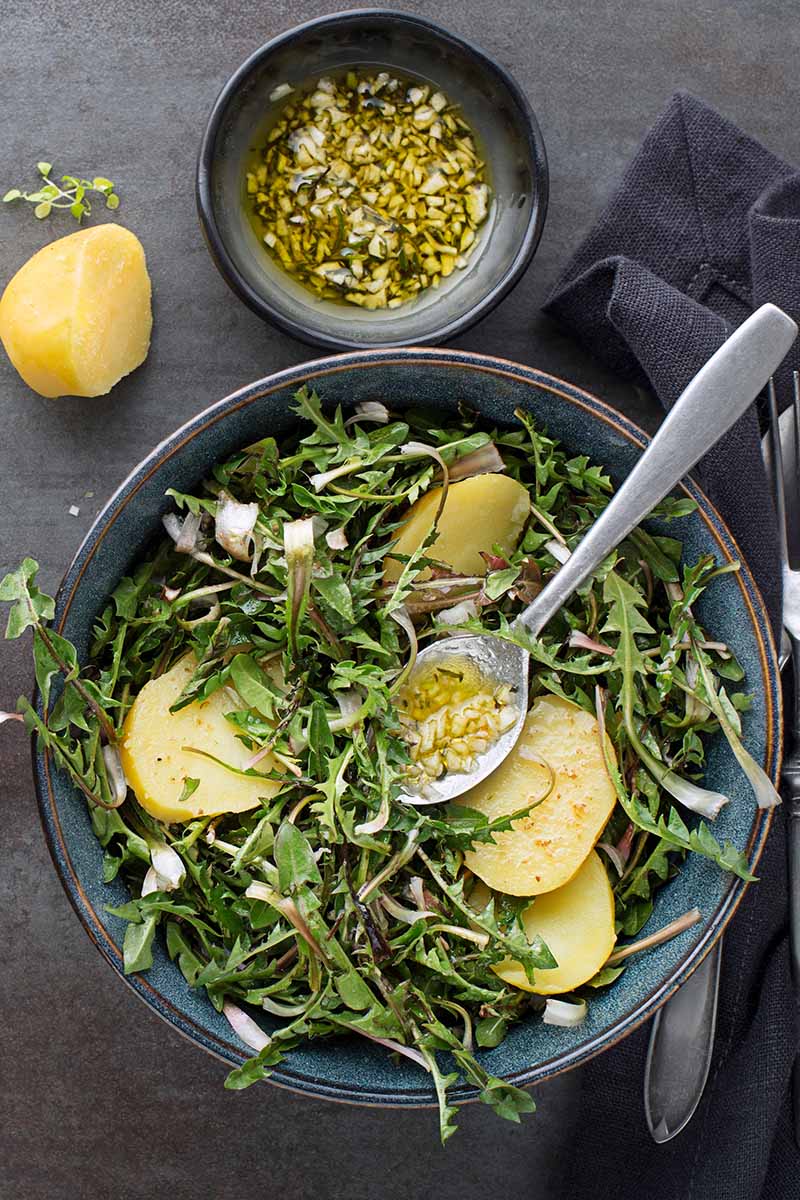
Stick with tender young leaves for salads — they’re great mixed with other pungent greens such as cress and arugula, and dressed with a good vinaigrette.
Of course, you can use the older leaves if you’re really into bitter flavors.
Since the dandelion part of this recipe is so easy, I will also include directions on how to make my favorite vinaigrette. Here’s how to do it:
- 6 tablespoons extra-virgin olive oil
- 1 tablespoon balsamic vinegar
- 1/2 teaspoon Dijon mustard
- 1/2 teaspoon mayonnaise
- 1-2 cloves minced garlic
- Salt and pepper to taste
Put all the ingredients together in a bowl and whisk vigorously until emulsified. Then pour over your fresh greens for a heady salad experience. Garnish with garlic croutons for extra oomph.
Or, substitute dandelion greens for the arugula in this roasted beet and goat cheese salad from our sister site, Foodal.
9. Fried Buds or Flowers
Both the buds and the flowers are excellent battered and fried.
You can use older dandelion buds for this rather than the tightly closed ones that you would use for making capers or candied buds.

Pluck about two cups of buds and flowers and soak them in cool water for 30 minutes or so to flush out ants or other visitors.
Rinse them and allow them to dry on a clean dish towel.
Mix one cup of flour with a teaspoon of garlic powder and a dash each of salt, hot chili powder, and pepper. Add one egg and a half-cup of beer. Mix well to combine.
Fill a frying pan with tall sides with an inch of canola oil. Place over medium-high heat, adjusting as needed depending on your stove. When you’re ready to fry, the oil should be shimmering and about 375°F.
Dip the buds and flowers in the batter and drop into the oil. Fry until golden and drain on paper towels. Serve with aioli or your favorite dip.
10. Green Juice
If you have lots of greens, you can whip them up into an uber-healthy green juice.
Rinse the leaves and dry them.
Use your favorite juice or coconut water as a base, and add the leaves and liquid to a high-speed blender.
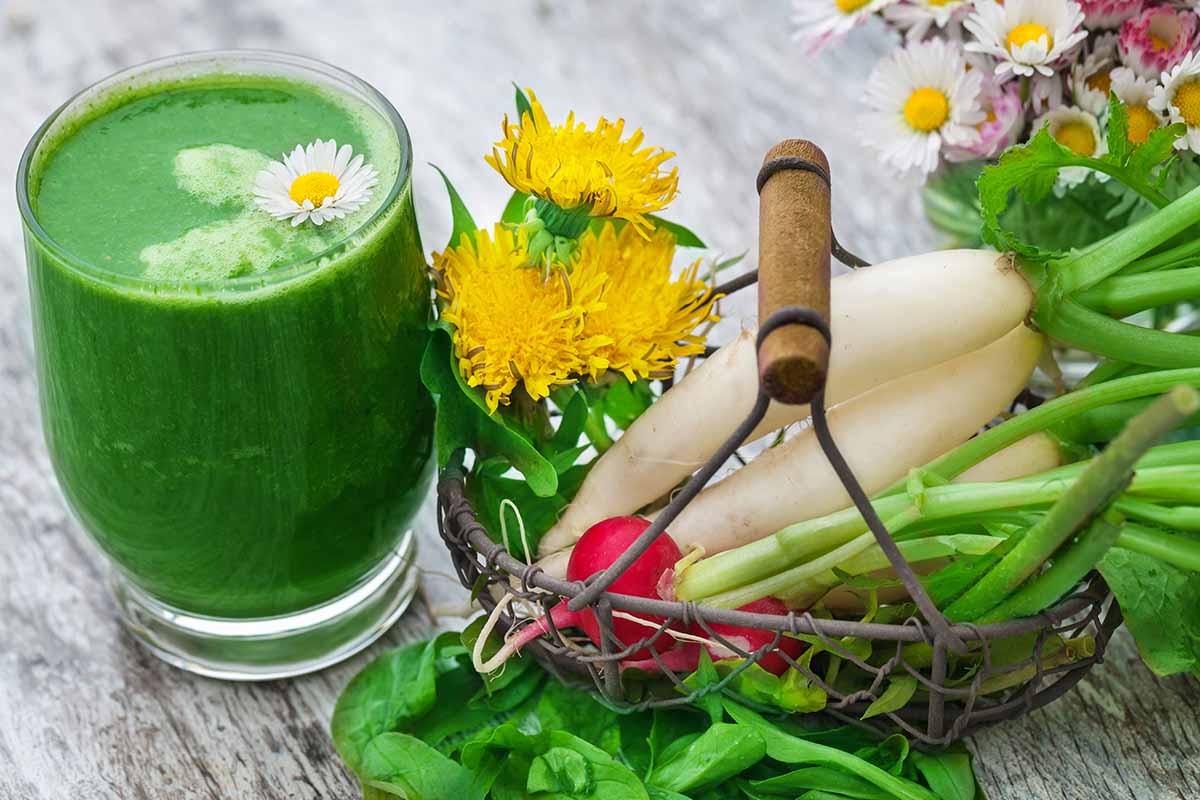
Most people opt to use fruit juice because the leaves are fairly bitter. You want about one part leaves to four parts juice or coconut water, so a quarter-cup of packed leaves to a cup of juice.
Blend them up well and strain out the solids if you want a thinner juice.
You can always add some ginger, lemon, celery, radishes, or fruit like apples to change up the flavor. Adjust the liquid as needed to reach a texture that you like.
Fresh dandelion greens can also be processed in your juicer, if you have one.
11. Infusion
To make an infusion, you can use dried or fresh leaves and flowers.
I use flowers for this one, since the flowers contain a powerful anti-inflammatory called taraxasterol that may help to relieve joint pain.
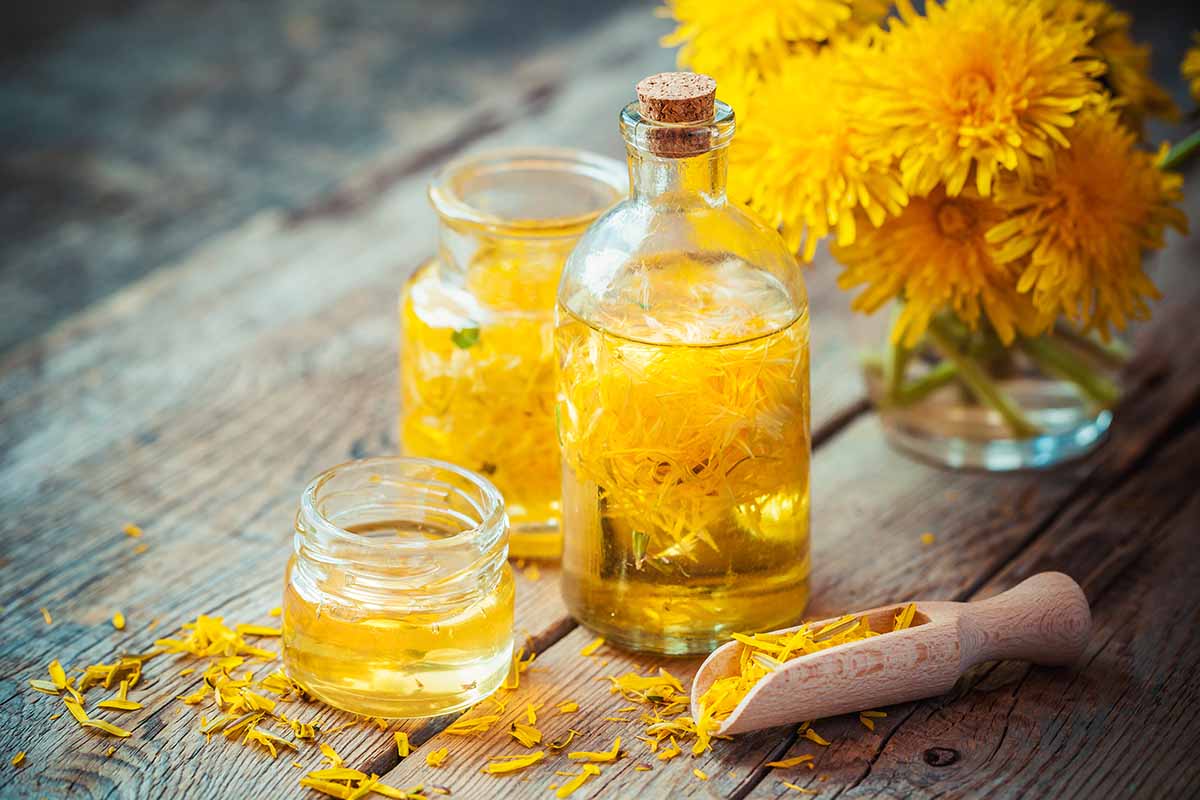
Collect a jar full of healthy, fresh flower heads and cover them with a neutral carrier oil, like almond or grapeseed. Float a couple of ounces of 100-proof vodka on top to prevent mold from forming.
Cover the jar with a piece of cheesecloth and put it in a warm, sunny place.
In about four weeks, the dandelion essence will have been absorbed into the oil. Pour off the vodka and strain out any solids, if you want.
You’re left with a sunny remedy for joint and muscle swelling and pain, and for any kind of weepy rash or other skin problem. Use four to eight ounces of the infusion externally up to three times per day.
12. Roasted Roots
This might be one of the easiest ways to use dandelion root.
Just clean them, and peel them if you like. Then, toss them in some olive oil and salt and roast them on a pan in the oven at 375°F until they reach a consistency you like. It’s as simple as roasting carrots.
If you roast the roots without oil and salt and dice them, they make an incredible addition to ice cream.
Whether you make your own ice cream or buy some vanilla that you love, mix in the dandelion root and top with chopped dark chocolate. Trust me on this.
Or, imagine how tasty the roots would be instead of or in addition to carrots in this balsamic Dijon pork recipe from Foodal.
13. Tea
All parts of the plant can be made into tea, whether you infuse the roots, leaves, or flowers.
If you roast the roots first, they can be used as a coffee substitute as described above. Otherwise, they make a lovely herbal tea.
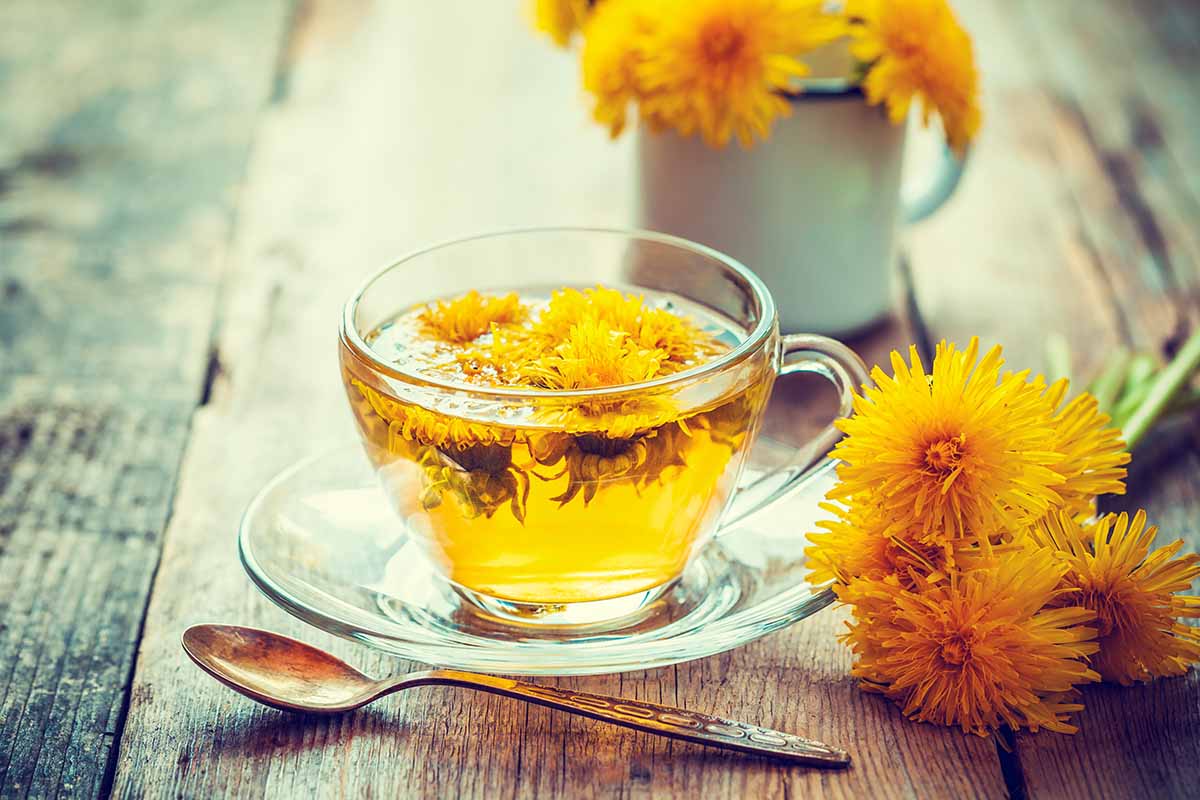
While the flavor is worth the effort of making it alone, you might even see some health benefits. People have been using dandelion tea for centuries as a medicine.
The roots and leaves produce a tea with a slightly grassy, bitter flavor. The flowers create a flavor that is a bit more sweet and floral.
Either way, add a tablespoon of dried plant material to a cup of boiling water. Double that amount if you’re using fresh ingredients.
Steep for up to 10 minutes, depending on your flavor preference. Strain, if desired, and enjoy. If you like sweetener in your tea, feel free to add some at this point.
And while we’re on the subject of tea, you can also brew up a batch of dandelion tea fertilizer for your garden!
14. Tincture
You know the tiny, overpriced bottles of tincture that you see in health food stores?
Well, you can make your own for practically nothing, and it’s incredibly easy. In fact, you can use these instructions to make a tincture out of almost any herb, not just dandelion.
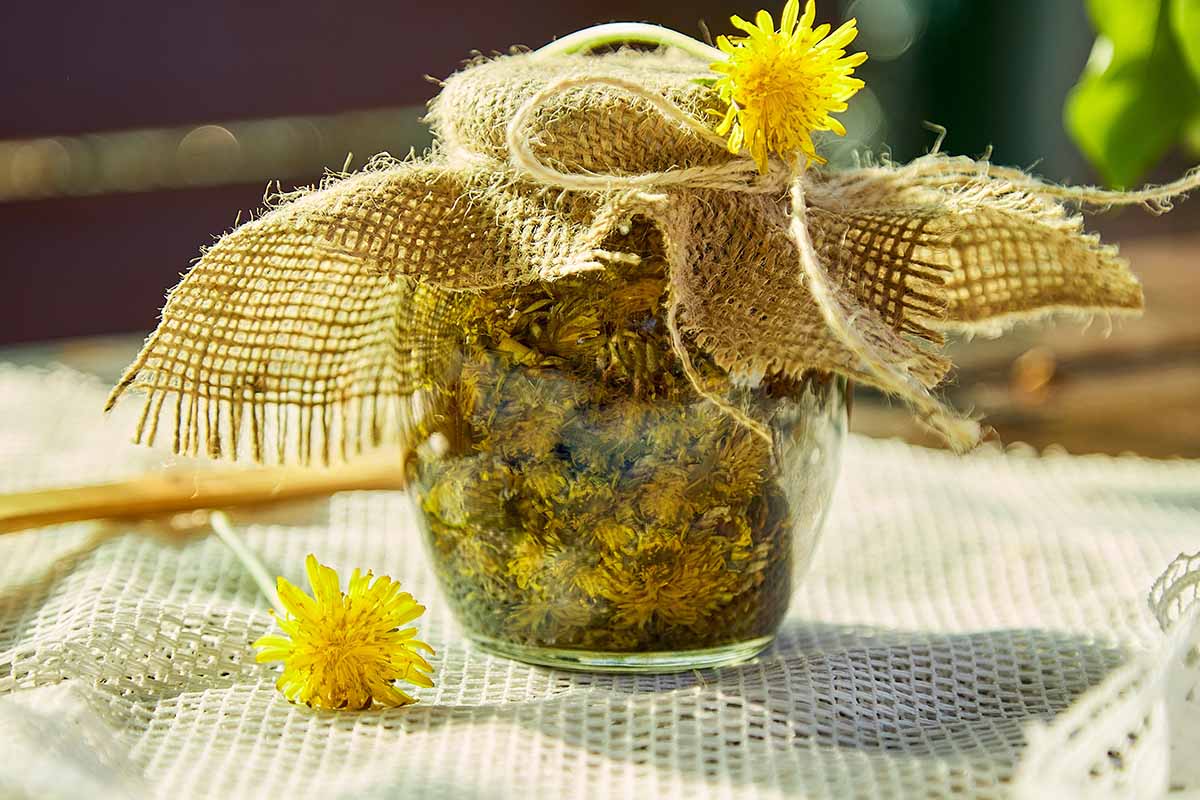
First, gather as much dandelion root, leaves, and flowers as you want – a cup or two is probably enough to start.
Clean your roots and slice them relatively thinly. Chop the leaves. Then put the pant material in a quart-size glass jar and cover in 100-proof vodka.
Set the jar in a cool, dark place, and within eight weeks, you’ll have a very strong tincture that may be added by the dropperful to water and used as a health tonic. You can strain out the solids or leave them. Store your tincture in a cool, dark spot.
You can add a bit of honey to reduce the bitterness, if desired.
15. Vinegar
Here’s another easy one. You can use flowers or leaves for this, or both.
Just gather your dandelions, chop the leaves if you’re using them, and strip the stems from your flowers. Pack the material into a jar and fill it with distilled vinegar.
Close the jar and place it in a cool, dark area, agitating the jar every few days. After a few weeks, the liquid will be a beautiful golden or green color, depending on what you used.
Strain the solids and you’ll be left with vinegar that’s a feast for the eyes and the stomach.
Remember that vinaigrette recipe we talked about under salads above? How good would it be if you made it using this dandelion vinegar?
Weeds Never Tasted So Good
There now. Don’t you feel healthier and more full already?
Try a few of these delicious and healthful recipes and remedies at home, and take pleasure in the fact that you were able to turn a yard full of common weeds into pure gold.
And the fact that you didn’t have to spend time and money getting rid of so-called weeds that are incredibly useful!
How do you plant to use up your glorious greens? Have big ideas for the flowers? Or is it root coffee for you? Fill us in on the details in the comments, and if we missed anything you love, let us know.
Looking for more ways to deal with weeds? We’ve got you covered. Here are some guides worth checking out:


Amazingly helpful! I was afraid to do anything with them but I knew they were very healthful so I don’t want to remove them from the backyard. Now i will and these recipes and uses are so appreciated! You have demystified the processes for us! Peace and thank you!
Hello Dani –
We’re so glad you enjoyed the article, and that the lowly dandelion has gained another appreciative fan!